


The Ultimate Guide to Ranking on AI Language Models: How to Get Your Business Recommended by ChatGPT, Gemini, and Perplexity
Here are three punchy excerpts, building on your idea and targeting the 180-character mark: Option 1 (Focus on the "New SEO") Ranking on Google isn't enough. The new frontier is getting AI like ChatGPT and Gemini to recommend your business. This guide is your map to AIO (AI Optimization), the new SEO.

The AI Revolution is Here: Are You Ready?
34% of U.S. adults now use ChatGPT regularly, and that number has doubled since 2023. While we don’t yet have specific data on local business recommendations, early indicators suggest a massive shift is happening. When someone asks “Who’s the best plumber near me?” or “What HVAC company should I trust in Tampa?” AI models like ChatGPT, Gemini, and Perplexity are increasingly becoming the new search engines.
The problem? AI results won’t automatically include your business. Unlike Google, where you can optimize your way to the top, AI models operate on entirely different principles. They need specific signals, fresh data, and third-party validation to even consider recommending your business.
This comprehensive guide reveals the exact strategies you need to rank on AI language models and capture this massive new traffic source before your competitors do.
Chapter 1: Understanding the AI Landscape
The Big Three AI Platforms Reshaping Local Search
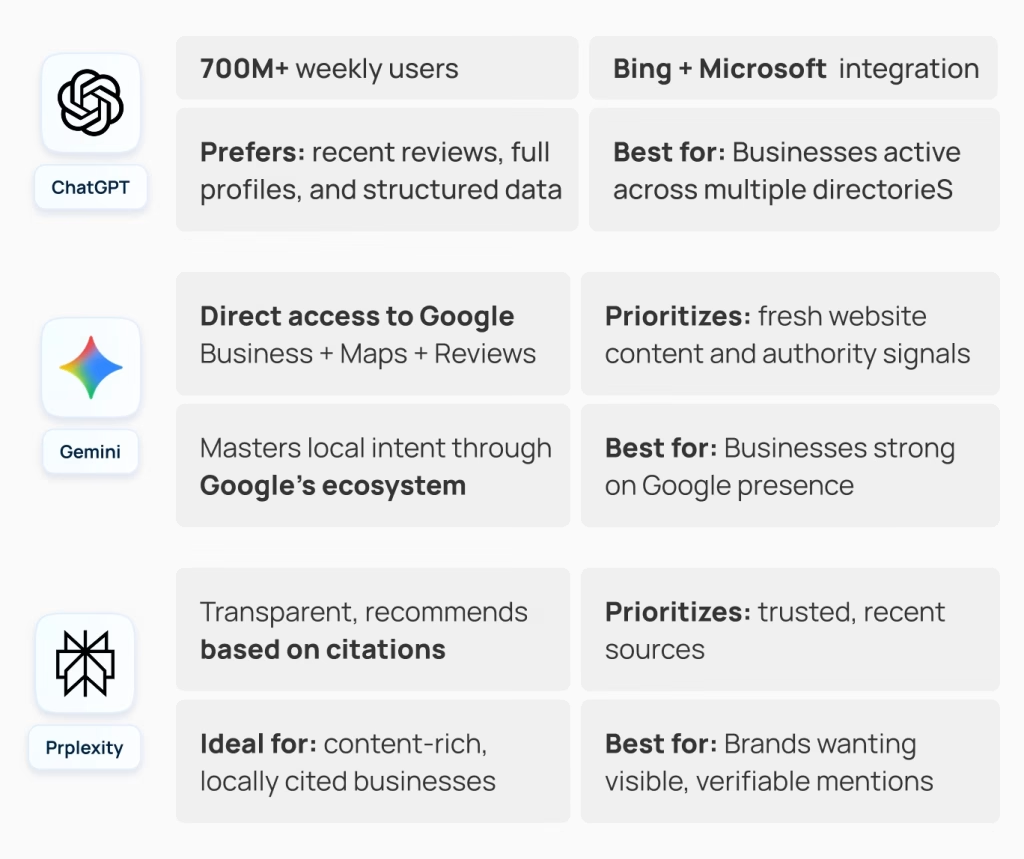
The AI landscape is rapidly evolving, but three major platforms are dominating the space for business recommendations and local search queries. Understanding how each operates is crucial for developing an effective AI optimization strategy.
ChatGPT (OpenAI) ChatGPT has become the undisputed leader in conversational AI, with 700 million weekly active users worldwide as of August 2025. The platform processes over 1 billion queries daily, making it a massive opportunity for businesses that can crack the code.
What makes ChatGPT unique for local business discovery:
- Heavy reliance on Microsoft Bing data (since OpenAI has a partnership with Microsoft)
- Preference for businesses with recent reviews and activity
- Strong integration with structured business data from directories
- Tendency to provide specific, actionable recommendations rather than lists
ChatGPT’s recommendation engine appears to prioritize businesses that have:
- Recent customer reviews (within the last 6 months)
- Complete business profiles across multiple platforms
- Mentions in local directories and trusted sources
- Clear, descriptive business information that AI can easily parse
Google Gemini With 400 million monthly users and growing, Google Gemini represents 13.4% of the U.S. chatbot market share. As Google’s answer to ChatGPT, Gemini has unique advantages in local business recommendations because it can access Google’s vast repository of business data.
Key advantages of Gemini for local businesses:
- Direct access to Google Business Profile data
- Integration with Google Maps and local search results
- Real-time access to Google Reviews and ratings
- Understanding of local search intent and geography
Gemini’s recommendation algorithm prioritizes:
- Businesses with strong Google presence (Business Profile, reviews, maps)
- Fresh, regularly updated content on business websites
- Structured data markup that helps AI understand business information
- Authority signals from other Google services
Perplexity AI While smaller than ChatGPT and Gemini, Perplexity is rapidly gaining market share by positioning itself as a more transparent, citation-based AI search engine. What makes Perplexity particularly interesting for businesses is its commitment to providing sources for its recommendations.
Perplexity’s unique approach:
- Always provides citations and sources for recommendations
- Prioritizes recent, authoritative content
- Excellent at finding and citing local news articles and blog posts
- Growing reputation among users who want transparency in AI responses
For businesses, this means Perplexity offers an opportunity to get recommended AND get traffic, since users can see exactly where the recommendation came from.
Why Traditional SEO Isn’t Enough
Traditional SEO focuses on ranking in Google’s search results, but AI models operate fundamentally differently. While Google crawls and indexes web pages to build rankings, AI models need different types of signals to make recommendations.
The Traditional SEO Model:
- Create content targeting specific keywords
- Build backlinks to increase domain authority
- Optimize technical elements (speed, mobile, structure)
- Wait for Google to crawl, index, and rank your pages
The AI Recommendation Model:
- Generate signals from real customers and genuine interactions
- Build presence across multiple trusted platforms and directories
- Create clear, descriptive content that AI can easily understand and summarize
- Maintain fresh, current information across all platforms
Key Differences in Ranking Factors:
Traditional SEO Priorities:
- Keyword density and placement
- Backlink quantity and quality
- Technical website optimization
- Content length and depth
- Page load speed and mobile optimization
AI Recommendation Priorities:
- Recent customer reviews and testimonials
- Consistent business information across platforms
- Third-party mentions and citations
- Clear, conversational business descriptions
- Active social proof and community engagement
The Data Sources AI Models Use:
Unlike Google, which primarily crawls websites, AI models pull information from diverse sources:
- Review Platforms: Yelp, Google Reviews, Better Business Bureau
- Business Directories: Local chambers of commerce, industry associations
- Social Media: Facebook, LinkedIn, Instagram business profiles
- News Sources: Local news websites, industry publications
- Structured Data: Schema markup, business listings with complete information
This fundamental difference means that businesses can’t simply optimize their website and expect AI recommendations. Success requires a multi-platform approach that creates signals across the entire digital ecosystem.
The Opportunity is Massive (And Mostly Untapped)
Most businesses are still focused exclusively on traditional Google SEO, creating a massive opportunity for early adopters of AI optimization. Consider these factors:
Market Timing:
- AI adoption is accelerating rapidly (34% of adults using ChatGPT, doubling since 2023)
- Most businesses haven’t yet adapted their marketing strategies for AI
- Competition for AI recommendations is currently low
- Early movers will establish authority that becomes harder to displace
User Behavior Shifts:
- Younger demographics (ages 18-29) are increasingly using AI for research and recommendations
- AI provides more conversational, personalized recommendations than traditional search
- Users trust AI recommendations because they feel more like personal advice
- AI can provide immediate, specific answers without requiring users to sift through multiple sources
Competitive Advantages:
- When AI recommends your business, you’re often the only recommendation, not one of 10 results
- AI recommendations come with implicit endorsement and credibility
- Users who follow AI recommendations tend to have higher conversion rates
- AI-driven leads often come pre-qualified with specific needs and intent
Chapter 2: The New Rules of AI Discovery
How AI Models Actually Make Recommendations
Understanding how AI models process information and make business recommendations is crucial for optimization success. Unlike search engines that rank web pages, AI models synthesize information from multiple sources to provide what they determine to be the most helpful, accurate recommendation.
The AI Decision-Making Process:
- Query Analysis: The AI first analyzes the user’s question to understand intent, location, service type, and any specific requirements mentioned.
- Data Gathering: The AI pulls information from its training data and, in some cases, real-time sources to identify potential businesses that match the criteria.
- Signal Evaluation: The AI evaluates various signals about each potential business, including recency of information, authority of sources, and consistency across platforms.
- Recommendation Generation: Based on this analysis, the AI generates a response that typically includes one to three specific recommendations with explanations.
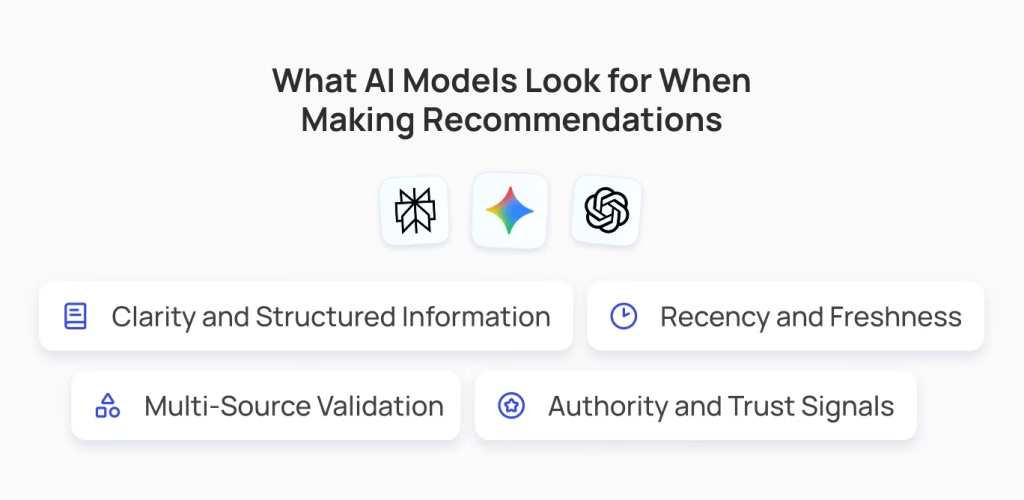
What AI Models Look for When Making Recommendations
Authority and Trust Signals AI models prioritize businesses that demonstrate credibility through multiple channels. This isn’t just about having a professional website—it’s about creating a consistent, authoritative presence across the digital ecosystem.
Key authority indicators:
- Professional Credentials: Licenses, certifications, and industry memberships prominently displayed
- Consistent Business Information: Name, address, phone number (NAP) matching across all platforms
- Third-Party Validation: Mentions in local news, industry publications, and reputable directories
- Social Proof: Reviews, testimonials, and customer success stories from multiple sources
- Industry Expertise: Demonstrated knowledge through content, case studies, and professional affiliations
Recency and Freshness Signals AI models strongly favor businesses with recent activity and current information. This makes sense from the AI’s perspective—it wants to recommend businesses that are currently active and reliable.
Critical freshness factors:
- Recent Reviews: Customer feedback within the last 3-6 months
- Updated Content: Fresh blog posts, project showcases, and service updates
- Current Business Information: Up-to-date hours, services, and contact details
- Recent Social Media Activity: Regular posts showing business activity
- Fresh Citations: New mentions in local directories, news articles, or industry publications
Clarity and Structured Information AI models excel at processing clear, well-structured information but struggle with ambiguous or poorly organized content. The easier you make it for AI to understand your business, the more likely you are to get recommended.
Optimization strategies:
- Clear Business Descriptions: Straightforward explanations of what you do and where you serve
- Structured Data Markup: Schema.org markup that helps AI understand your business information
- Consistent Formatting: Standardized information presentation across all platforms
- Specific Service Details: Clear descriptions of services, service areas, and specializations
- Contact Information Prominence: Easy-to-find phone numbers, addresses, and business hours
Multi-Source Validation AI models look for consistency and validation across multiple sources before making recommendations. A business mentioned in only one place is less likely to be recommended than one with presence across multiple platforms.
Validation strategies:
- Directory Presence: Listings in multiple relevant business directories
- Review Platform Diversity: Reviews on Google, Yelp, and industry-specific platforms
- Social Media Presence: Active profiles on relevant social platforms
- News and Media Mentions: Features in local news, industry publications, or community websites
- Professional Networks: LinkedIn presence, industry association memberships
The Psychology of AI Recommendations
Understanding why users trust and act on AI recommendations helps inform optimization strategies. AI recommendations feel different to users than traditional search results, and this difference creates unique opportunities.
Why Users Trust AI Recommendations:
- Personalized Feel: AI responses feel like getting advice from a knowledgeable friend rather than searching through impersonal listings.
- Curated Results: Instead of 10 blue links, users get 1-3 specific recommendations with explanations, reducing decision fatigue.
- Contextual Understanding: AI can consider multiple factors (location, budget, urgency) in its recommendations, making them feel more relevant.
- Authoritative Presentation: AI presents recommendations with confidence and supporting details, creating trust in the suggestion.
User Behavior Patterns with AI Recommendations:
- Higher Conversion Intent: Users who follow AI recommendations often have stronger purchase intent
- Reduced Research Time: AI recommendations shortcut the typical research process
- Brand Loyalty Impact: Being recommended by AI can create positive brand associations
- Word-of-Mouth Amplification: Users often share AI recommendations with others
The Competitive Landscape
Most businesses are still unaware of AI optimization opportunities, creating significant advantages for early adopters. Understanding the current competitive landscape helps identify opportunities and timing strategies.
Current State of AI Optimization:
- Low Awareness: Most businesses don’t yet understand AI recommendation factors
- No Standardized Practices: Unlike SEO, there are no widely accepted AI optimization best practices
- Fragmented Efforts: Some businesses accidentally rank well through existing good practices
- Opportunity Window: Early movers can establish authority before competition intensifies
Competitive Advantages for Early Adopters:
- Authority Establishment: Being among the first in your industry to optimize for AI creates lasting authority signals
- Citation Building: Early citation building becomes the foundation for ongoing AI visibility
- Review Momentum: Starting review generation early creates compound advantages
- Learning Curve Benefits: Early experience with AI optimization provides ongoing strategic advantages
Chapter 3: ChatGPT Optimization Strategies
Understanding ChatGPT’s Recommendation Engine

ChatGPT has become the most widely used AI for business recommendations, making it a critical platform for optimization efforts. Understanding how ChatGPT processes business information and makes recommendations is essential for effective optimization.
ChatGPT’s Data Sources and Preferences
ChatGPT’s recommendations appear to be based on several key data sources:
- Microsoft Bing Integration: Due to OpenAI’s partnership with Microsoft, ChatGPT heavily relies on Bing’s search index and business data
- Directory Information: Business listings from major directories and review platforms
- News and Media Sources: Recent articles, press releases, and media mentions
- Structured Business Data: Information formatted in ways that AI can easily parse and understand
The Three Pillars of ChatGPT Optimization
Based on analysis of ChatGPT’s recommendation patterns, three factors appear most critical for getting your business recommended:
Pillar 1: Fresh Review Generation (Quick Win – High Impact)
ChatGPT shows a strong preference for businesses with recent customer reviews, particularly those within the last 6 months. This makes sense from an AI perspective—recent reviews indicate current business activity and customer satisfaction.
The 90-Day Review Sprint Strategy
Week 1-2: Foundation Setup
- Audit all existing review platforms to understand current status
- Identify your most satisfied customers from recent projects
- Set up systems for monitoring new reviews across platforms
- Create templates for review requests that feel natural and helpful
Week 3-4: Direct Outreach
- Contact recent customers with personalized review requests
- Focus on customers who had excellent experiences or results
- Provide direct links to make the review process as easy as possible
- Follow up professionally if initial requests don’t generate responses
Week 5-8: Systematic Implementation
- Integrate review requests into your standard customer follow-up process
- Train team members on appropriate timing and methods for review requests
- Create incentives for team members to generate reviews (without violating platform policies)
- Monitor review velocity and adjust approaches based on what works
Week 9-12: Optimization and Scaling
- Analyze which review request methods generate the highest response rates
- Identify the optimal timing for review requests in your customer journey
- Expand successful strategies across all customer touchpoints
- Begin monitoring ChatGPT recommendations to track improvement
Platform-Specific Review Strategies
Google Reviews:
- Most important for overall AI visibility due to Google’s dominant data presence
- Focus on getting reviews that mention specific services and locations
- Encourage customers to include details about the work performed
- Respond professionally to all reviews, both positive and negative
Yelp Reviews:
- Particularly important for ChatGPT recommendations in many markets
- Yelp’s review filtering algorithm requires genuine, detailed reviews
- Focus on encouraging customers who are active Yelp users
- Never incentivize Yelp reviews with discounts or rewards (violates Yelp policies)
Industry-Specific Platforms:
- Angie’s List (now Angi) for home services
- Avvo for legal services
- Healthgrades for healthcare providers
- TripAdvisor for hospitality and tourism
Review Content Optimization
Not all reviews are created equal for AI recommendations. Reviews that include specific details about services, locations, and outcomes are more valuable than generic positive comments.
Encourage Reviews That Include:
- Specific services performed (“AC repair,” “bathroom renovation,” “tax preparation”)
- Location details (“in downtown Tampa,” “at our Scottsdale office”)
- Problem-solving details (“fixed our heating issue quickly,” “resolved our complicated tax situation”)
- Outcome descriptions (“saved us money,” “completed on time,” “exceeded expectations”)
Pillar 2: Bing Places Optimization (Medium Effort – High Impact)
Due to ChatGPT’s connection to Microsoft, optimizing your Bing Places profile appears to have disproportionate impact on ChatGPT recommendations compared to the platform’s overall search market share.
Complete Bing Places Profile Optimization
Business Information Completeness:
- Ensure all basic business information is 100% accurate and complete
- Include comprehensive service descriptions with location-specific details
- Add extensive business hours, including holiday and emergency hours
- Upload high-quality photos of your work, team, and facilities
Service Area Specification:
- Clearly define your service areas with specific cities and neighborhoods
- Include distance radiuses for mobile services
- Mention any travel fees or service area limitations
- Update service areas seasonally if applicable (e.g., snow removal, pool services)
Content Depth and Quality:
- Write detailed business descriptions that include services, experience, and specializations
- Use natural language that explains what you do and why customers choose you
- Include relevant keywords naturally without over-optimization
- Highlight unique selling propositions and competitive advantages
Bing Places Advanced Features
Photo and Media Optimization:
- Upload at least 10-15 high-quality photos showing your work and facilities
- Include before/after project photos when appropriate
- Add team photos to build trust and personal connection
- Create short video introductions or project showcases if possible
Post Creation and Updates:
- Regularly post updates about completed projects, seasonal services, or company news
- Share helpful tips and advice related to your industry
- Announce special offers or new services through Bing posts
- Maintain a consistent posting schedule to show ongoing business activity
Pillar 3: Multi-Source Citation Building (Strategic – Long-term Impact)
ChatGPT appears to give preference to businesses mentioned across multiple trusted sources, not just those with their own websites. This creates opportunities for businesses willing to invest in building comprehensive digital presence.
Local Directory and Citation Strategy
Tier 1 Directories (Immediate Priority):
- Better Business Bureau (BBB) with full profile and customer reviews
- Local Chamber of Commerce membership and directory listing
- Industry-specific professional associations and directories
- Local government or licensing board directories where applicable
Tier 2 Directories (Secondary Priority):
- Nextdoor business listings for hyperlocal visibility
- Local newspaper business directories
- Community website business listings
- Niche industry directories specific to your field
Tier 3 Directories (Long-term Building):
- General business directories like Yellow Pages, SuperPages
- Social media business profiles (Facebook, LinkedIn, Instagram)
- Local event and networking organization listings
- Charity and community involvement listings
Content and Media Mention Strategy
Local News and Media Outreach:
- Develop relationships with local business reporters and bloggers
- Offer expert commentary on industry trends and local issues
- Submit press releases for significant business milestones or community involvement
- Participate in local business awards and recognition programs
Content Creation for Authority Building:
- Guest posting on local business blogs and industry publications
- Contributing expert advice to community forums and Q&A platforms
- Speaking at local business events and trade shows
- Hosting or sponsoring community events that generate media coverage
Partnership and Collaboration Opportunities:
- Joint ventures with complementary businesses that generate cross-mentions
- Vendor and supplier relationships that include business listings
- Professional referral networks and reciprocal listing agreements
- Community organization involvement that generates business mentions
ChatGPT-Specific Content Optimization
Writing Business Descriptions for AI Understanding
ChatGPT responds well to clear, conversational business descriptions that explain what you do, where you do it, and why customers choose you. Avoid marketing jargon and focus on clear, helpful information.
Effective AI-Friendly Business Description Structure:
- Clear Service Statement: “[Business Name] is a [type of business] serving [location/area]”
- Service Specialization: “We specialize in [specific services] for [target customer type]”
- Experience and Credentials: “With [years] years of experience and [relevant credentials/certifications]”
- Unique Value Proposition: “We’re known for [what sets you apart] and [customer benefits]”
- Contact and Availability: “Available [days/hours] for [service types] throughout [service area]”
Example – Poor AI Description: “Elite comfort solutions and temperature wizards bringing you the ultimate in climate control satisfaction with unparalleled service excellence.”
Example – Good AI Description: “ABC HVAC is a licensed heating and air conditioning contractor serving greater Phoenix and surrounding areas. We specialize in AC repair, furnace installation, and system maintenance for residential and commercial properties. With 15 years of experience and NATE certification, we’re known for fast response times and transparent pricing. Available 24/7 for emergency repairs throughout Phoenix, Scottsdale, and Tempe.”
Local SEO Integration with AI Optimization
While AI optimization requires different strategies than traditional SEO, there’s significant overlap that smart businesses can leverage:
Keyword Research for AI Optimization:
- Focus on conversational, question-based keywords
- Research how people ask for recommendations in your industry
- Identify location-specific service combinations
- Understand seasonal and emergency-related search patterns
Content Creation That Serves Both SEO and AI:
- Blog posts answering common customer questions
- Service area pages with detailed local information
- Case studies and project showcases with location details
- FAQ sections addressing typical customer concerns
Measuring ChatGPT Optimization Success
Direct Measurement Techniques
Regular Query Testing:
- Test relevant queries weekly to track recommendation appearance
- Use variations of location and service combinations
- Test from different locations to understand geographic impact
- Document changes in recommendation frequency and positioning
Traffic Source Analysis:
- Monitor referral traffic from AI platforms in Google Analytics
- Track increases in direct traffic that may result from AI recommendations
- Monitor branded search increases that may indicate AI-driven awareness
- Set up conversion tracking for AI-influenced customers
Indirect Success Indicators
Review and Citation Growth:
- Track review velocity across all platforms
- Monitor citation growth and directory listing improvements
- Measure improvements in overall online presence consistency
- Track social media mention increases
Lead Quality and Conversion Improvements:
- Monitor lead qualification improvements from AI-influenced customers
- Track conversion rate improvements for specific service areas
- Measure average project size increases
- Monitor customer lifetime value improvements
Chapter 4: Mastering Google Gemini
Understanding Gemini’s Unique Advantages
Google Gemini operates with distinct advantages over other AI platforms when it comes to local business recommendations. As Google’s native AI, Gemini has direct access to the company’s vast repository of business data, real-time information, and local search intelligence that other AI models must approximate or access indirectly.
Gemini’s Data Ecosystem Access
Unlike ChatGPT, which relies on partnerships and static training data, Gemini can access:
- Real-time Google Business Profile data including current hours, recent posts, and live review updates
- Google Maps integration with location data, directions, and geographic context
- Google Search trends showing what customers are actually searching for in your area
- YouTube content from your business channel, customer testimonials, and industry-related videos
- Google Analytics insights (for verified businesses) providing behavioral data about customer interactions
This integration means that businesses with strong Google ecosystem presence have natural advantages in Gemini recommendations, but it also creates opportunities for strategic optimization.
The E-E-A-T Framework for Gemini Optimization
Google has long emphasized E-E-A-T (Experience, Expertise, Authoritativeness, Trustworthiness) for search rankings, and these principles appear even more critical for Gemini recommendations. AI models need clear signals about business credibility, and E-E-A-T provides a framework for creating these signals.

Experience: Demonstrating Real-World Business Experience
Gemini prioritizes businesses that can demonstrate genuine, extensive experience in their field. This goes beyond simply stating years in business—it requires providing concrete evidence of experience through multiple channels.
Portfolio and Case Study Development:
- Create detailed case studies of significant projects with before/after photos
- Include specific challenges faced and solutions implemented
- Mention geographic locations and project timelines to add credibility
- Highlight any unusual or complex projects that showcase expertise
- Include customer quotes and testimonials that speak to your experience level
Experience Documentation Strategies:
- Maintain a comprehensive portfolio on your website with filtering by service type and location
- Create separate case study pages for different service areas or customer types
- Include time-stamped project updates showing progression and completion
- Document any industry firsts, innovations, or unique approaches you’ve developed
- Create video walkthroughs of completed projects when appropriate
Professional Timeline and Credentials:
- Develop a detailed company history page showing business evolution and growth
- Include founder and key employee backgrounds with relevant experience
- Document major projects, awards, and recognition received over time
- Show progression from smaller to larger or more complex projects
- Include any industry leadership roles, speaking engagements, or published work
Expertise: Building and Demonstrating Subject Matter Authority
Gemini appears to prioritize businesses that demonstrate deep knowledge in their field through content creation, thought leadership, and technical competency.
Content Strategy for Expertise Building:
- Create comprehensive guides addressing common customer questions and concerns
- Develop seasonal content that addresses timely industry issues (e.g., “Preparing Your HVAC System for Phoenix Summer”)
- Write detailed explanations of your processes, techniques, and methodologies
- Address industry myths, misconceptions, and frequently misunderstood concepts
- Create comparison content helping customers understand different options and approaches
Technical Demonstration Through Content:
- Film time-lapse videos of complex projects showing your process
- Create educational content explaining technical concepts in accessible language
- Develop troubleshooting guides that demonstrate diagnostic expertise
- Share insights about industry trends, new technologies, or regulatory changes
- Create tool and equipment guides based on your professional experience
Industry Thought Leadership:
- Contribute expert opinions to industry publications and local news sources
- Participate in professional associations and speak at industry events
- Offer expert commentary on local issues related to your field
- Develop innovative approaches or solutions that set industry standards
- Create and share research or data analysis relevant to your industry
Authoritativeness: Building Industry and Community Recognition
Authority signals tell Gemini that your business is recognized and respected within your industry and local community. These signals come from external sources and cannot be self-created.
Professional Recognition and Credentials:
- Obtain and prominently display relevant industry certifications and licenses
- Join professional associations and work toward leadership positions
- Apply for industry awards and recognition programs
- Seek manufacturer certifications for products and services you offer
- Participate in continuing education and display current training certificates
Community Authority Building:
- Engage in local business leadership through chamber of commerce participation
- Volunteer professional services for community organizations and events
- Sponsor local events, sports teams, or charitable causes
- Participate in local government committees or advisory boards related to your industry
- Offer educational workshops or seminars for community members
Media and Publication Authority:
- Seek opportunities for expert interviews in local and industry media
- Write guest articles for industry publications and local business journals
- Provide expert commentary on breaking news related to your field
- Develop relationships with local reporters who cover your industry
- Create and distribute press releases for significant business achievements
Trustworthiness: Creating and Maintaining Customer Confidence
Trust signals are perhaps most critical for AI recommendations, as the AI model is essentially vouching for your business to its users.
Transparency and Communication:
- Provide clear, upfront pricing information and service descriptions
- Maintain detailed privacy policies and terms of service
- Display business licenses, insurance information, and bonding details
- Create detailed FAQ sections addressing common customer concerns
- Provide multiple contact methods and guarantee response timeframes
Customer Protection and Guarantees:
- Offer clear warranties, guarantees, or satisfaction policies
- Display insurance coverage and bonding information
- Provide detailed contracts and service agreements
- Maintain Better Business Bureau accreditation with high ratings
- Create customer complaint resolution processes and display them publicly
Social Proof and Verification:
- Encourage and display customer testimonials with attribution
- Maintain active presence on review platforms with professional responses
- Display security badges, professional association memberships, and certifications
- Create customer reference programs for significant projects
- Document and share customer success stories and positive outcomes
Content Freshness and Update Strategies
Gemini shows strong preference for businesses with regularly updated, fresh content. This preference likely stems from Google’s broader emphasis on content freshness and its understanding that active businesses are more likely to provide good customer experiences.
Website Content Update Strategies
Blog and Content Calendar Development:
- Create a content calendar addressing seasonal industry topics and customer needs
- Publish weekly blog posts addressing current customer questions and concerns
- Update service pages regularly with new offerings, updated pricing, or process improvements
- Create location-specific content for different service areas
- Develop FAQ sections that grow and evolve based on actual customer inquiries
Project Showcase Updates:
- Add new case studies and project photos monthly
- Update portfolio sections with recent work and customer testimonials
- Create before/after galleries showing ongoing business activity
- Include project timelines and completion dates to demonstrate current activity
- Feature customer reviews and testimonials from recent projects
Technical Content and Resource Updates:
- Update service process descriptions based on new techniques or technologies
- Create seasonal maintenance guides and checklists for customers
- Develop troubleshooting resources addressing common problems
- Update product and service recommendations based on industry changes
- Create educational content addressing new regulations or industry standards
Social Media and Platform Activity
Google Business Profile Management:
- Post weekly updates about completed projects, seasonal services, or helpful tips
- Share customer reviews and testimonials through posts
- Upload new photos regularly showing current work and team activity
- Update business information immediately when changes occur
- Respond to customer questions and reviews within 24 hours
Professional Social Media Presence:
- Maintain active LinkedIn presence with industry insights and company updates
- Share project updates and customer success stories on appropriate platforms
- Engage with industry discussions and local business community conversations
- Share helpful tips and advice related to your services
- Participate in relevant industry groups and local business forums
Structured Data Implementation for Gemini
Gemini’s connection to Google’s search infrastructure means that structured data markup can significantly impact recommendation likelihood. Proper implementation helps Gemini understand your business information quickly and accurately.
Essential Schema Markup Implementation
LocalBusiness Schema:
html
<script type="application/ld+json">
{
  "@context": "https://schema.org",
  "@type": "LocalBusiness",
  "name": "Your Business Name",
  "description": "Licensed HVAC contractor specializing in AC repair, heating installation, and maintenance services",
  "url": "https://yourbusiness.com",
  "telephone": "+1-555-123-4567",
  "email": "info@yourbusiness.com",
  "address": {
    "@type": "PostalAddress",
    "streetAddress": "123 Main Street",
    "addressLocality": "Phoenix",
    "addressRegion": "AZ",
    "postalCode": "85001",
    "addressCountry": "US"
  },
  "geo": {
    "@type": "GeoCoordinates",
    "latitude": "33.4484",
    "longitude": "-112.0740"
  },
  "areaServed": [
    "Phoenix, AZ",
    "Scottsdale, AZ",
    "Tempe, AZ",
    "Mesa, AZ"
  ],
  "openingHours": [
    "Mo-Fr 08:00-18:00",
    "Sa 08:00-16:00"
  ],
  "priceRange": "$$",
  "aggregateRating": {
    "@type": "AggregateRating",
    "ratingValue": "4.8",
    "reviewCount": "124"
  }
}
</script>
Service Schema for Specific Offerings:
html
<script type="application/ld+json">
{
  "@context": "https://schema.org",
  "@type": "Service",
  "name": "Emergency AC Repair",
  "description": "24/7 emergency air conditioning repair services for residential and commercial properties",
  "provider": {
    "@type": "LocalBusiness",
    "name": "Your Business Name"
  },
  "areaServed": {
    "@type": "City",
    "name": "Phoenix"
  },
  "hasOfferCatalog": {
    "@type": "OfferCatalog",
    "name": "HVAC Services",
    "itemListElement": [
      {
        "@type": "Offer",
        "itemOffered": {
          "@type": "Service",
          "name": "AC Repair"
        }
      },
      {
        "@type": "Offer",
        "itemOffered": {
          "@type": "Service",
          "name": "Heating Installation"
        }
      }
    ]
  }
}
</script>
Advanced Structured Data Implementation
Review and Rating Schema:
- Implement review schema to help Gemini understand customer satisfaction
- Include individual review markup for detailed customer feedback
- Add aggregate rating information for overall business performance
- Update review schema regularly as new reviews are received
FAQ Schema for Common Questions:
- Create FAQ schema addressing common customer questions
- Include location-specific questions and answers
- Update FAQ content based on actual customer inquiries
- Structure answers to provide value to both users and AI
Event Schema for Community Involvement:
- Mark up any events, workshops, or seminars you host
- Include community involvement and sponsorship activities
- Add educational events or home shows where you participate
- Structure seasonal or recurring service events
Local Optimization Specific to Gemini
Google Business Profile Advanced Optimization
Complete Profile Information:
- Fill out every available field in your Google Business Profile
- Include detailed service descriptions with location-specific information
- Add comprehensive business hours including holiday and emergency availability
- Upload high-quality photos in all categories (exterior, interior, team, work samples)
Posts and Updates Strategy:
- Create weekly posts about completed projects with before/after photos
- Share seasonal tips and advice relevant to your local market
- Announce new services, team members, or business developments
- Respond to customer questions through posts when appropriate
Review Management and Response:
- Respond to all reviews within 24-48 hours with personalized messages
- Address negative reviews professionally with solutions offered
- Thank customers for positive reviews and encourage future business
- Use review responses to provide additional information about your services
Local Content Strategy for Geographic Relevance
Location-Specific Service Pages:
- Create dedicated pages for each major service area with unique content
- Include location-specific challenges, regulations, or considerations
- Mention local landmarks, neighborhoods, or geographic features
- Address seasonal issues specific to your local climate and environment
Community Involvement Content:
- Document and share your involvement in local events and organizations
- Create content about local business partnerships and collaborations
- Share insights about local regulations, permits, or industry standards
- Highlight any local awards, recognition, or media coverage
Automated Citation and Content Creation Through AI Marketing Platforms
The Citation Building Challenge
Building citations across hundreds of directories manually is time-consuming and prone to errors. Most businesses need presence on 40+ directories to achieve optimal AI visibility, but managing this manually requires:
- 20+ hours per month updating listings
- Constant monitoring for NAP consistency issues
- Manual response to directory approval processes
- Ongoing maintenance as business information changes
How AI Marketing Platforms Solve the Citation Problem
Modern AI marketing platforms automate the entire citation building process:
Automated Directory Submission:
- Submit your business to 40+ high-priority directories simultaneously
- Handle all approval processes and follow-up requirements automatically
- Maintain consistent NAP (Name, Address, Phone) information across all platforms
- Monitor and update listings when your business information changes
Citation Monitoring and Management:
- Scan the web for existing citations and identify inconsistencies
- Automatically submit correction requests for incorrect information
- Track citation approval status and handle rejections with alternative approaches
- Provide real-time reporting on citation building progress and impact
Strategic Directory Selection:
- AI algorithms identify the most valuable directories for your specific industry and location
- Prioritize high-authority directories that influence AI recommendations
- Focus on directories most likely to be crawled by AI models
- Avoid low-quality directories that could harm your online reputation
Content Suggestions and Creation Assistance
AI-Powered Content Strategy Development
Advanced platforms analyze your market, competitors, and AI ranking factors to suggest content that will improve your visibility:
Competitive Content Gap Analysis:
- Identify content topics where competitors rank but you don’t
- Analyze which content types generate AI recommendations in your industry
- Suggest blog post topics, FAQ sections, and service page improvements
- Provide content templates optimized for AI understanding
Local Content Opportunities:
- Identify local events, news, and trends relevant to your business
- Suggest community involvement opportunities that generate citations
- Recommend partnerships with other local businesses for cross-promotion
- Create seasonal content calendars addressing local customer needs
Technical Content Optimization:
- Generate AI-friendly business descriptions for different platforms
- Create structured data markup suggestions for your website
- Develop FAQ content that matches common AI queries
- Optimize existing content for better AI comprehension
Automated Content Distribution
Multi-Platform Content Syndication:
- Adapt core content for different platforms (website, social media, directories)
- Maintain consistent messaging while optimizing for platform-specific requirements
- Schedule content publication across multiple channels simultaneously
- Track content performance and engagement across all platforms
Review and Testimonial Management:
- Generate review request campaigns with optimized timing and messaging
- Create templates for responding to reviews that reinforce key business information
- Identify satisfied customers most likely to leave detailed, helpful reviews
- Monitor review sentiment and suggest improvements to customer experience
The ROI of Automated AI Optimization
Time Savings and Efficiency Gains
Manual vs. Automated Approach:
Manual AI Optimization (Monthly Time Investment):
- Citation building and management: 20+ hours
- Content creation and optimization: 15+ hours
- Review monitoring and response: 8+ hours
- Social media management: 12+ hours
- Performance tracking and reporting: 6+ hours
- Total: 60+ hours per month
Automated Platform Approach:
- Initial setup and configuration: 2 hours
- Monthly review and strategy adjustment: 3 hours
- Total: 5 hours per month
Cost-Benefit Analysis:
- Average business owner/manager hourly rate: $50-75
- Manual approach cost: $3,000-4,500 per month in time
- Platform subscription cost: $200-500 per month
- Net savings: $2,500-4,000 per month
Performance and Results Acceleration
Speed to Results:
- Manual citation building: 6-12 months for comprehensive coverage
- Automated platform: 30-60 days for initial coverage, ongoing optimization
- AI recommendation appearance: 3-6 months faster with automation
- ROI achievement: 4-8 months vs. 12-18 months manually
Quality and Consistency Improvements:
- Error reduction: 90% fewer NAP inconsistencies with automated management
- Coverage expansion: 3-5x more directory presence with automated submissions
- Response time: 24/7 monitoring vs. weekly manual checks
- Optimization precision: AI-driven strategy vs. guesswork-based manual efforts
Measuring Gemini Optimization Success
Advanced Analytics and Reporting Through AI Platforms
Comprehensive Performance Dashboards:
- Real-time AI recommendation tracking across all major platforms
- Citation building progress with impact analysis
- Content performance metrics showing AI visibility improvements
- ROI calculation showing leads and revenue attributed to AI optimization
Competitive Intelligence Integration:
- Monitor competitor AI recommendation frequency and positioning
- Track competitive citation building and content strategies
- Identify opportunities where competitors are gaining AI visibility
- Benchmark your progress against industry leaders in AI optimization
Google-Specific Analytics and Tracking
Google Business Profile Insights:
- Monitor profile views, photo views, and direction requests
- Track customer actions taken from your profile (website visits, calls)
- Analyze search queries that lead customers to your profile
- Monitor changes in profile visibility and ranking for local searches
Search Console Integration:
- Track organic search performance for location-specific keywords
- Monitor click-through rates and impressions for local search terms
- Analyze which content pages receive the most traffic from local searches
- Track improvements in local search rankings over time
Google Analytics Enhanced Analysis:
- Set up location-based audience segments to track local traffic
- Monitor conversion rates for different geographic areas
- Track the customer journey from local search to conversion
- Analyze which local content generates the most engagement and conversions
Chapter 5: Perplexity AI Optimization

Understanding Perplexity’s Unique Position
Perplexity AI has carved out a distinctive niche in the AI landscape by positioning itself as the “answer engine” that provides transparent, cited responses to user queries. While smaller than ChatGPT and Gemini in terms of user base, Perplexity is rapidly gaining market share among users who value transparency and source verification in AI responses.
What makes Perplexity particularly valuable for businesses is its commitment to citation and source attribution. When Perplexity recommends a business, it typically provides clickable sources that drive traffic back to the original content. This creates a unique opportunity for businesses to not only get recommended but also receive direct traffic from AI recommendations.
Perplexity’s Distinctive Features
Citation-Based Recommendations:
- Every business recommendation includes source citations
- Users can click through to original sources for more information
- Builds trust through transparency about information sources
- Creates traffic opportunities beyond just the recommendation itself
Real-Time Information Access:
- Perplexity can access current web information, not just training data
- Provides up-to-date business information including recent news and updates
- Can incorporate real-time factors like current business hours or seasonal availability
- Responds to current events and trending topics that may affect business recommendations
Academic and Professional User Base:
- Growing popularity among researchers, professionals, and educated consumers
- Users tend to have higher income and education levels
- Strong adoption in professional services and B2B sectors
- Users often conduct more thorough research before making decisions
Source Authority and Citation Building
The foundation of Perplexity optimization lies in building authoritative sources that the AI can cite when making recommendations. Unlike other AI platforms that may rely primarily on directory information, Perplexity actively seeks out and cites high-quality, authoritative content.
Tier 1 Authority Sources (Highest Priority)
Industry Publications and Trade Journals:
- Contribute expert articles to industry magazines and trade publications
- Offer expert commentary on industry trends and developments
- Participate in industry surveys and research studies
- Develop relationships with industry publication editors and writers
Local and Regional News Sources:
- Build relationships with local business reporters and editors
- Offer expert commentary on local issues related to your industry
- Submit press releases for significant business developments or community involvement
- Participate in local business features and “best of” lists
Professional Association Publications:
- Write articles for professional association newsletters and websites
- Contribute to association research studies and white papers
- Participate in association events and conferences as a speaker or panelist
- Seek leadership positions in professional organizations that generate media coverage
Tier 2 Authority Sources (Secondary Priority)
Business and Chamber of Commerce Publications:
- Contribute to local chamber of commerce newsletters and websites
- Participate in chamber-sponsored events and business spotlights
- Write guest articles for local business journals and magazines
- Engage in chamber leadership roles that generate publication opportunities
Industry Blogs and Online Publications:
- Guest post on established industry blogs and websites
- Contribute expert opinions to industry forums and discussion platforms
- Participate in podcast interviews and webinar presentations
- Collaborate with industry influencers and thought leaders on content
Educational Institution Partnerships:
- Partner with local colleges or trade schools on educational content
- Contribute to industry research studies conducted by academic institutions
- Offer guest lectures or workshops that generate coverage
- Participate in industry advisory boards for educational programs
Content Creation for Citation Opportunities
Research and Data-Driven Content:
- Conduct industry surveys or studies within your local market
- Compile and analyze industry data relevant to your service area
- Create comprehensive reports on local market conditions or trends
- Develop case studies that demonstrate industry innovations or best practices
Thought Leadership Content:
- Write detailed analysis of industry trends and their local implications
- Create predictive content about future industry developments
- Address controversial industry topics with well-reasoned perspectives
- Develop innovative approaches or solutions that other businesses can reference
Educational Resource Development:
- Create comprehensive guides that become industry reference materials
- Develop tools, calculators, or resources that other professionals use
- Produce training materials or courses that establish expertise
- Build resource libraries that become go-to references for industry information
Real-Time Engagement and Responsiveness
Perplexity’s ability to access real-time information creates opportunities for businesses that maintain active, current online presence and can respond quickly to industry developments and customer needs.
Social Media Strategy for Real-Time Visibility
Platform Selection and Focus:
- Prioritize LinkedIn for B2B and professional service businesses
- Maintain active Twitter/X presence for real-time industry commentary
- Use Instagram for visual businesses (construction, landscaping, retail)
- Engage on industry-specific platforms and forums
Content Timing and Responsiveness:
- Share timely commentary on industry news and developments
- Respond quickly to trending topics related to your industry
- Participate in real-time discussions during industry events or crises
- Provide immediate value during seasonal peaks or emergency situations
Engagement and Community Building:
- Build relationships with industry influencers and fellow professionals
- Participate actively in industry groups and professional communities
- Share and comment thoughtfully on relevant industry content
- Collaborate with other businesses and professionals on content and initiatives
News and Media Responsiveness
Industry News Commentary:
- Monitor industry news sources for opportunities to provide expert perspective
- Develop relationships with reporters who regularly cover your industry
- Create template responses for common industry issues that can be quickly customized
- Offer yourself as a reliable source for expert quotes and commentary
Local Issue Engagement:
- Stay informed about local government decisions that affect your industry
- Participate in public forums and community discussions related to your field
- Offer expertise during local crises or events that relate to your services
- Contribute to local policy discussions and regulatory considerations
Seasonal and Timely Content Creation:
- Develop content calendars that anticipate seasonal industry issues
- Create and share relevant content during peak service periods
- Address weather-related or emergency situations that affect your industry
- Provide timely advice and resources during community events or challenges
Technical Excellence for Perplexity
Perplexity’s sophisticated AI requires well-structured, technically sound websites and content that can be easily crawled, indexed, and understood.
Website Technical Optimization
Site Speed and Performance:
- Optimize images and media for fast loading across all devices
- Implement content delivery networks (CDNs) for improved global performance
- Minimize code bloat and unnecessary plugins that slow site performance
- Regular performance testing and optimization to maintain fast load times
Mobile and User Experience Optimization:
- Ensure full mobile responsiveness across all devices and screen sizes
- Implement touch-friendly navigation and interface elements
- Optimize forms and contact methods for mobile use
- Test user experience regularly across different devices and browsers
Security and Trust Signals:
- Implement SSL certificates and ensure all pages load securely
- Display security badges and trust signals prominently
- Maintain up-to-date software and security patches
- Create and prominently display privacy policies and terms of service
Content Structure and Accessibility
Information Architecture:
- Create clear, logical site navigation that helps both users and AI understand content organization
- Use descriptive URLs that include relevant keywords and location information
- Implement breadcrumb navigation to show content hierarchy
- Create XML sitemaps and submit them to search engines
Semantic HTML and Accessibility:
- Use proper heading structure (H1, H2, H3) to organize content logically
- Implement alt text for all images that describes content and context
- Use descriptive link text that explains destination content
- Ensure content is accessible to screen readers and assistive technologies
Content Formatting for AI Understanding:
- Structure content with clear introductions, body sections, and conclusions
- Use bullet points and numbered lists to organize information clearly
- Include relevant keywords naturally within well-written, helpful content
- Create content that answers specific questions users might ask
Local Market Intelligence and Positioning
Perplexity’s real-time capabilities allow it to consider current local market conditions, seasonal factors, and geographic nuances when making recommendations.
Local Market Research and Content Development
Market Analysis and Positioning:
- Research local competitors and identify opportunities for differentiation
- Analyze local economic conditions and their impact on your industry
- Understand seasonal patterns and regional preferences that affect business
- Identify underserved market segments or geographic areas
Location-Specific Content Strategy:
- Create content addressing local regulations, permits, and compliance requirements
- Develop service area pages that address specific local challenges and opportunities
- Include local case studies and project examples that demonstrate area expertise
- Address climate, geographic, or demographic factors unique to your service areas
Community Involvement and Local Authority:
- Participate in local business organizations and networking groups
- Engage in community service and volunteer activities that generate recognition
- Sponsor local events, teams, or charitable causes
- Contribute expertise to local government committees or advisory boards
Competitive Intelligence and Market Positioning
Competitor Analysis and Differentiation:
- Monitor competitor online presence and identify gaps in their coverage
- Analyze competitor content strategies and identify opportunities for better, more comprehensive coverage
- Track competitor news coverage and industry recognition to identify positioning opportunities
- Develop unique service offerings or approaches that differentiate your business
Market Gap Identification:
- Research underserved customer segments or geographic areas
- Identify seasonal or emergency services that competitors don’t adequately address
- Analyze customer complaints about competitors to identify service improvement opportunities
- Develop specialized expertise in niche areas that competitors don’t cover
Measuring Perplexity Optimization Success
Citation and Source Tracking
Source Attribution Monitoring:
- Set up Google Alerts for your business name and key personnel
- Monitor industry publications for mentions and citations
- Track social media mentions and shares of your content
- Use tools like Mention or Brand24 to track online mentions across platforms
Traffic and Referral Analysis:
- Monitor referral traffic from Perplexity and other AI platforms
- Track which content pages receive the most external links and citations
- Analyze which types of content generate the most authority and recognition
- Monitor improvements in domain authority and online credibility metrics
Authority and Recognition Metrics
Industry Recognition Tracking:
- Monitor awards, certifications, and professional recognition received
- Track speaking engagements, media interviews, and thought leadership opportunities
- Analyze growth in professional network connections and industry relationships
- Monitor improvements in search rankings for industry expertise keywords
Content Performance and Engagement:
- Track social media engagement and shares for thought leadership content
- Monitor email newsletter subscriptions and engagement rates
- Analyze which content generates the most professional inquiries and opportunities
- Track improvements in overall brand recognition and market positioning
Chapter 6: Content That AI Models Love

Understanding AI Content Preferences
AI models process and evaluate content differently than human readers or traditional search engines. While humans might be drawn to creative language, emotional appeals, or visual design, AI models prioritize clarity, specificity, and structured information that they can easily parse and understand.
The AI Content Processing Model
When AI models encounter business content, they’re essentially asking:
- What does this business do? (Service identification)
- Where do they do it? (Geographic scope)
- Who are their customers? (Target market understanding)
- How well do they do it? (Quality and reliability indicators)
- When are they available? (Accessibility and responsiveness)
Content that clearly answers these questions in structured, accessible language performs better in AI recommendations than content that relies on creativity or marketing language that might confuse automated understanding.
AI Content Evaluation Criteria
Clarity and Specificity:
- Direct language that explains services without jargon or metaphor
- Specific geographic information that helps AI understand service areas
- Clear descriptions of processes, methods, and approaches
- Concrete examples and case studies rather than abstract descriptions
Factual Information Density:
- Specific details about services, pricing, and availability
- Measurable outcomes and results from past projects
- Technical specifications and process descriptions
- Credential and certification information
Structural Organization:
- Logical information hierarchy with clear headings and sections
- Consistent formatting that helps AI understand content relationships
- Progressive information disclosure from general to specific
- Cross-referenced information that builds comprehensive understanding
Project Case Studies That Convert
Case studies represent one of the most valuable content types for AI recommendations because they provide concrete evidence of business capability while addressing specific customer problems and solutions.
The AI-Optimized Case Study Structure
1. Problem Identification and Context Start each case study with a clear description of the customer’s problem, including specific details that help AI understand the situation and match it to similar user queries.
Effective Problem Descriptions:
- “Homeowner in Scottsdale experiencing uneven cooling in 3,200 sq ft two-story home”
- “Restaurant in downtown Phoenix needed emergency electrical repair after kitchen equipment failure”
- “Law firm required assistance with complex estate planning involving multiple states and tax jurisdictions”
Context Elements to Include:
- Geographic location and any location-specific challenges
- Timeline constraints or urgency factors
- Budget considerations or cost parameters
- Any unique circumstances that affected the project approach
2. Detailed Solution Description Explain your approach and methodology in specific terms that demonstrate expertise and help AI understand your capabilities and processes.
Solution Documentation Should Include:
- Step-by-step process description
- Tools, equipment, or methods used
- Timeline and project phases
- Team members or specialists involved
- Any innovative approaches or problem-solving techniques
Example Solution Description: “Our certified technicians performed a comprehensive diagnostic including thermal imaging of the home’s ductwork, which revealed significant air leakage in the second-floor return system. We redesigned the ductwork configuration, sealed all connections with mastic, and installed a zoned HVAC system with separate thermostats for each floor. The project required coordination with the homeowner’s schedule and was completed over three days with minimal disruption to daily activities.”
3. Measurable Results and Outcomes Provide specific, quantifiable results that demonstrate the value of your work and help AI understand the quality of outcomes you deliver.
Result Documentation:
- Performance improvements with specific measurements
- Cost savings achieved for the customer
- Timeline adherence and efficiency gains
- Customer satisfaction indicators
- Long-term benefits and ongoing value
Example Results Section: “Following the ductwork redesign and zoning installation, the home achieved consistent temperatures within 2 degrees throughout all rooms. The homeowner reported a 23% reduction in monthly energy costs during the following summer season and rated the overall experience 5 stars. The zoned system now allows independent temperature control for each floor, solving the original comfort issues while improving energy efficiency.”
4. Customer Testimonial and Attribution Include direct customer feedback with attribution when possible, as this provides social proof that AI models can reference in recommendations.
Testimonial Best Practices:
- Include customer name and location (with permission)
- Use specific language about services and outcomes
- Address both process and results satisfaction
- Include timeframe of service delivery
Industry-Specific Case Study Adaptations
Home Services Case Studies:
- Include before/after photos with detailed captions
- Address seasonal or weather-related challenges
- Mention permit requirements and code compliance
- Include warranty and follow-up service information
Professional Services Case Studies:
- Focus on process expertise and methodology
- Include industry-specific regulations or requirements addressed
- Highlight communication and project management approaches
- Address confidentiality and professional standards maintained
Healthcare and Wellness Case Studies:
- Emphasize patient education and care coordination
- Include treatment timelines and follow-up protocols
- Address insurance and accessibility considerations
- Focus on patient outcomes and satisfaction improvements
Local Authority Content Development
Creating content that establishes local expertise and authority helps AI models understand your geographic relevance and community connection.
Geographic Expertise Content
Climate and Environmental Factors:
- “HVAC Considerations for Phoenix’s Extreme Heat: System Sizing and Efficiency Tips”
- “Plumbing Challenges in Older Austin Homes: Lead Pipes and Foundation Issues”
- “Roofing Material Selection for Pacific Northwest Rain and Wind Conditions”
Regulatory and Code Compliance:
- “Understanding Denver’s Updated Building Codes for Electrical Installations”
- “Navigating HOA Requirements for Exterior Home Improvements in Scottsdale”
- “Florida Hurricane Preparedness: Structural Engineering and Safety Considerations”
Local Market and Economic Factors:
- “Real Estate Market Trends Affecting Home Renovation Decisions in Seattle”
- “Commercial Property Compliance Requirements for Restaurants in Chicago”
- “Property Tax Implications of Home Improvements in High-Value Austin Neighborhoods”
Community Connection Content
Local Partnerships and Collaborations:
- Document partnerships with other local businesses
- Highlight collaborations with community organizations
- Share involvement in local events and sponsorships
- Feature relationships with local suppliers and vendors
Seasonal and Event-Based Content:
- Address seasonal service needs specific to your geographic area
- Create content around local events that affect business (festivals, sports seasons, weather patterns)
- Provide advice for local holiday traditions or community celebrations
- Address emergency preparedness specific to local risks (hurricanes, earthquakes, severe weather)
Historical and Cultural Context:
- Address unique challenges of historic buildings or neighborhoods in your area
- Consider cultural preferences and demographics in service delivery
- Understand and address local business customs and expectations
- Include knowledge of local landmarks, neighborhoods, and geographic features
Service Pages in Plain Language
AI models perform best with clear, conversational language that directly explains what you do and how customers benefit from your services.
The Plain Language Service Description Formula
Opening Service Statement (AI-Friendly): “[Business Name] provides [specific service] for [customer type] in [geographic area]. We specialize in [specific specializations] and are known for [key differentiators].”
Example: “ABC Plumbing provides residential and commercial plumbing services for property owners throughout greater Phoenix. We specialize in emergency repairs, water heater installations, and preventive maintenance, and are known for same-day service and transparent pricing.”
Service Process Description: Explain your approach step-by-step in language that helps both customers and AI understand your methodology and professionalism.
Process Documentation Template:
- Initial Assessment: “We begin with [specific evaluation method] to understand [what you’re assessing]”
- Planning and Preparation: “Based on our assessment, we [planning process] and prepare [necessary materials/permits]”
- Implementation: “Our certified technicians [implementation process] using [specific methods/tools]”
- Quality Assurance: “We complete [quality check process] to ensure [specific standards met]”
- Customer Education: “Before finishing, we [education/training provided] so you understand [ongoing maintenance/operation]”
Availability and Accessibility Information: Include specific information about how and when customers can access your services.
Essential Availability Details:
- Business hours and emergency availability
- Geographic service areas with any limitations
- Response time expectations for different service types
- Booking processes and scheduling flexibility
- Contact methods and preferred communication channels
AI-Friendly Content Formatting
Heading Structure for AI Understanding
Use clear, descriptive headings that help AI models understand content organization and find relevant information quickly.
Effective Heading Hierarchy:
- H1: Primary service or page topic
- H2: Major service categories or process steps
- H3: Specific services or detailed process elements
- H4: Technical details or specific customer types
Example Heading Structure for HVAC Services:
H1: Residential HVAC Services in Phoenix
  H2: Air Conditioning Services
    H3: AC Repair and Diagnostics
    H3: AC Installation and Replacement
    H3: Preventive Maintenance Programs
  H2: Heating Services
    H3: Furnace Repair and Service
    H3: Heat Pump Installation
    H3: Ductwork Design and Installation
  H2: Emergency Services
    H3: 24/7 Emergency Repairs
    H3: Same-Day Service Availability
Information Organization for AI Processing
List-Based Information Presentation:
- Use bullet points for service features and benefits
- Create numbered lists for process steps
- Organize pricing information in clear, structured formats
- Present qualification and certification information in easy-to-scan lists
Table Formatting for Complex Information:
- Service comparison tables showing different options
- Pricing tables with clear service descriptions
- Availability schedules showing service hours and coverage
- Qualification tables showing certifications and expertise areas
FAQ Development for AI Optimization
Create comprehensive FAQ sections that address common customer questions in conversational language that matches how people interact with AI.
Question Formatting Best Practices:
- Use natural language questions that customers actually ask
- Include location-specific variations of common questions
- Address seasonal or timing-related questions
- Include emergency or urgent situation questions
Answer Structure for AI Understanding:
- Start with direct, specific answers
- Provide additional context and explanation
- Include relevant process or methodology information
- Reference related services or considerations when appropriate
Example AI-Optimized FAQ:
Q: How quickly can you respond to an emergency plumbing repair in Scottsdale? A: We provide 24/7 emergency plumbing services throughout Scottsdale with typical response times of 60-90 minutes. Our emergency service includes burst pipes, sewer backups, water heater failures, and gas line issues. We carry fully-stocked service vehicles and can handle most emergency repairs on the first visit. Emergency service is available every day of the year, including holidays, with no additional weekend or holiday fees.
Content Distribution and Syndication Strategy
Multi-Platform Content Adaptation
Website Content as Foundation:
- Create comprehensive service pages that serve as authoritative content sources
- Develop detailed case studies and project showcases
- Build resource libraries and educational content
- Maintain active blog with regular, helpful content
Social Media Content Adaptation:
- Adapt case studies into social media post series
- Share quick tips and advice derived from comprehensive guides
- Create visual content showcasing projects and processes
- Engage in industry discussions using expertise demonstrated in full content
Directory and Platform Optimization:
- Use consistent business descriptions across all platforms
- Adapt service descriptions for different directory formats
- Include links back to comprehensive content when possible
- Maintain consistency in tone and key messaging
Content Freshness and Update Strategies
Regular Content Maintenance:
- Review and update service pages quarterly
- Refresh case studies with new projects and outcomes
- Update FAQ sections based on current customer inquiries
- Revise pricing and availability information as needed
Seasonal Content Updates:
- Create seasonal service content addressing timely customer needs
- Update emergency preparedness information for weather seasons
- Refresh availability and scheduling information for busy periods
- Address seasonal pricing or service variations
Industry Development Integration:
- Update content when new technologies or methods become available
- Address regulatory changes affecting your industry
- Include new certifications or qualifications in service descriptions
- Adapt content based on customer feedback and emerging needs
Chapter 7: The Social Media Strategy for AI

The Social Clarity Imperative
Traditional social media marketing often emphasizes creativity, brand personality, and emotional connection. However, for AI optimization, social media content must balance engagement with clarity, ensuring that AI models can easily understand and categorize your business when analyzing your social presence.
Why Social Media Matters for AI Recommendations
AI models increasingly consider social media presence as a signal of business legitimacy, activity, and customer engagement. Social platforms provide real-time insights into business operations, customer satisfaction, and community involvement that AI can use to validate recommendations.
Social Signals AI Models Evaluate:
- Consistency of messaging across platforms and with other business information
- Frequency of activity indicating ongoing business operations
- Customer interaction quality showing responsive customer service
- Content relevance demonstrating industry expertise and local knowledge
- Professional presentation indicating business credibility and attention to detail
Platform-Specific Optimization Strategies
Google Business Profile: The AI Foundation
Google Business Profile serves as perhaps the most critical social platform for AI optimization, particularly for Gemini, due to its direct integration with Google’s business data ecosystem.
Advanced Google Business Profile Optimization
Post Strategy for AI Visibility:
Weekly Project Showcases: Create posts that document completed projects with specific details that help AI understand your capabilities and service quality.
Template for Project Posts: “Completed: [Specific Service] for [Customer Type] in [Location] Project Details: [Brief description of work performed] Challenge: [Specific problem solved] Solution: [Methods/approach used] Result: [Measurable outcome] Service Area: [Geographic coverage]”
Example: “Completed: Emergency AC repair for family home in Tempe Project Details: Diagnosed and replaced failed compressor unit in 4-ton residential system Challenge: System failure during 115°F heat wave with elderly residents Solution: Same-day parts sourcing and installation with temporary cooling provided Result: System restored to full operation within 6 hours, customer comfort maintained Service Area: Emergency services available throughout Phoenix metro area”
Seasonal Service Announcements: Create posts that address timely service needs and demonstrate proactive customer care.
Seasonal Post Template: “[Season/Weather Event] [Service Type] Tips for [Location] Residents:
- [Specific tip 1 with local relevance]
- [Specific tip 2 with actionable advice]
- [Specific tip 3 with prevention focus] Call [phone] for professional [service type] throughout [service area].”
Customer Education Content: Share helpful information that demonstrates expertise while providing genuine value to potential customers.
Educational Post Structure: “Professional Tip: [Specific advice] Why This Matters: [Explanation of consequences/benefits] When to Take Action: [Timing guidance] DIY vs. Professional: [Clear guidance on when to call professionals] Local Considerations: [Area-specific factors]”
Photo and Media Optimization for AI:
- Include alt text for all images that describes the service or work shown
- Use consistent branding and professional image quality
- Caption photos with specific details about location, service type, and outcomes
- Include before/after comparisons when appropriate and with customer permission
LinkedIn: Professional Authority Building
LinkedIn serves as a critical platform for establishing professional credibility and industry authority, particularly important for B2B services and professional service providers.
Content Strategy for Professional Authority
Industry Insight Sharing: Share informed perspectives on industry trends, regulations, and developments that demonstrate expertise and thought leadership.
Industry Insight Template: “Industry Update: [Specific development/trend] Impact on [Local Area]: [Local implications] What This Means for [Customer Type]: [Practical implications] Our Approach: [How your business addresses this development] Looking Ahead: [Future considerations or preparations]”
Professional Network Engagement:
- Participate actively in industry group discussions
- Share and comment thoughtfully on relevant industry content
- Connect with local business leaders, suppliers, and complementary service providers
- Engage with customer posts and business developments when appropriate
Educational Content for Professional Audience: Create content that serves both potential customers and industry peers, establishing expertise while building professional relationships.
Facebook and Instagram: Community Connection
These platforms allow for more visual storytelling and community engagement while maintaining the clarity needed for AI understanding.
Visual Content with Clear Messaging
Project Documentation: Use visual content to showcase work quality while providing clear descriptions that help AI understand your capabilities.
Visual Content Best Practices:
- Include detailed captions that explain what’s shown in images
- Use consistent hashtags that include location and service information
- Tag locations when appropriate to build geographic relevance
- Create story highlights that organize content by service type or location
Community Engagement Content:
- Share involvement in local events and community activities
- Highlight partnerships with other local businesses
- Document charitable work or community service activities
- Feature team members and company culture in professional contexts
Content Clarity vs. Creativity Balance
The Plain Language Principle
While creativity and personality are important for social media engagement, AI optimization requires clear, descriptive language that leaves no ambiguity about what you do and where you do it.
Examples of AI-Optimized Social Content
Poor AI Clarity (but potentially engaging): “Another day, another satisfied customer! 🔥 When the heat is on, we keep our cool and deliver the goods! Your comfort heroes are always ready to battle the Arizona sun! #ComfortHeroes #ACWhisperers #PhoenixHeat”
Good AI Clarity (and still engaging): “Completed emergency AC repair in Scottsdale today! Replaced faulty capacitor and restored cooling for family during 118°F heat wave. Our technicians carry common parts for same-day repairs throughout Phoenix metro. Available 24/7 for emergency HVAC service. #ACRepair #ScottsdaleHVAC #EmergencyService”
Hashtag Strategy for AI Understanding
Essential Hashtag Categories:
- Service Tags: #ACRepair #PlumbingService #ElectricalWork
- Location Tags: #PhoenixBusiness #ScottsdaleServices #TempeContractor
- Industry Tags: #HVAC #Licensed Plumber #CertifiedElectrician
- Outcome Tags: #EmergencyRepair #SameDay Service #CustomerSatisfaction
Hashtag Implementation Best Practices:
- Use 5-10 relevant hashtags per post rather than maximum allowed
- Mix broad industry terms with specific local and service combinations
- Create branded hashtags for tracking but don’t rely on them exclusively
- Research competitor hashtag usage to identify effective combinations
Customer Interaction and Response Strategy
Response Time and Quality Standards
AI models appear to consider social media responsiveness as an indicator of overall business quality and customer service standards.
Response Time Targets:
- Comments on posts: Within 4-6 hours during business hours
- Direct messages: Within 1-2 hours during business hours
- Reviews and mentions: Within 24 hours maximum
- Emergency-related inquiries: Immediate response with clear next steps
Professional Response Templates
Positive Feedback Response: “Thank you [Customer Name]! We’re thrilled that our [specific service] met your expectations in [location]. We appreciate customers like you and look forward to serving your [service type] needs in the future. Please don’t hesitate to contact us at [phone] for any questions or future projects.”
Service Inquiry Response: “Hi [Name], thank you for your interest in our [service type] services. We’d be happy to help with your [specific need] in [location]. Please call us at [phone] or visit [website] to schedule a consultation. We typically respond to [service area] requests within [timeframe] and provide upfront pricing for all work.”
Problem or Complaint Response: “Thank you for bringing this to our attention, [Name]. We take all customer concerns seriously and would like to resolve this promptly. Please call our office at [phone] so we can discuss your experience and determine the best way to address your concerns. We’re committed to ensuring your satisfaction with our [service type] services.”
Social Proof and Testimonial Integration
Customer Success Story Amplification
Multi-Platform Story Distribution: When you receive a great customer review or complete a noteworthy project, create adapted content for multiple platforms:
- Google Business Profile: Detailed project post with photos and outcomes
- LinkedIn: Professional case study with industry insights
- Facebook: Community-focused story with local relevance
- Instagram: Visual story with before/after images
- Twitter: Quick update with key details and relevant hashtags
Social Proof Content Templates:
Customer Testimonial Amplification: “Customer Spotlight: [Customer Name] from [Location] Service Provided: [Specific service] Their Experience: ‘[Direct quote from review]’ Project Details: [Brief description of work] Why We’re Proud: [What made this project special] Similar Project Needs? Call [phone] for [service area] service.”
Local Community Engagement
Event and Community Participation
Community Event Documentation:
- Live post from local business events and trade shows
- Share involvement in community service projects
- Document sponsorship activities and local partnerships
- Highlight team participation in local professional organizations
Local Business Partnership Content:
- Feature collaborations with other local businesses
- Share customer referrals to complementary service providers
- Highlight local supplier relationships and partnerships
- Create joint content with other local business owners
Seasonal and Local Interest Content
Weather and Season-Specific Content:
- Address seasonal service needs with timely advice
- Share weather-related tips and preparation strategies
- Document seasonal project types and considerations
- Provide emergency contact information during severe weather
Local Interest and News Engagement:
- Comment professionally on local news that affects your industry
- Share relevant local business news and developments
- Participate in local government or regulation discussions when appropriate
- Highlight local economic developments that affect your customers
Content Calendar and Consistency Strategy
Weekly Content Planning Framework
Monday: Industry/Professional Content
- Share industry news with local perspective
- Provide professional tips and advice
- Highlight certifications or training updates
Tuesday: Project Showcase
- Feature completed project with details
- Share before/after photos when appropriate
- Include customer testimonials or feedback
Wednesday: Educational Content
- Offer helpful tips for customers
- Address common questions or concerns
- Provide seasonal advice and preparation tips
Thursday: Community/Local Content
- Highlight local business partnerships
- Share community involvement activities
- Feature local news or events relevant to your industry

Get Recommended by ChatGPT, Gemini & Other AI
AI models are becoming the new default search engine for many people. The businesses that win are the ones optimized for this next frontier, not just Google. Our free AI ranking audit reveals if you are visible to ChatGPT, Gemini, Perplexity and more, and shows you where your biggest opportunities are. Take control of the future of discovery today.
Start My Free AI Ranking Audit
Elisabeth Spencer
CEO & Co-Founder
Elisabeth Spencer leads Olly Olly with a clear mission: to make growth attainable for everyday business owners. She is recognized for pairing sharp business instincts with a down-to-earth leadership style that inspires both her team and the clients they serve. Elisabeth believes the best companies are built with equal parts ambition and humanity: values that continue to shape Olly Olly’s culture and its impact on entrepreneurs nationwide.